
A furnace in Texas or Georgia fails for the reasons any furnace fails. A furnace in De Pere, Appleton, or Kaukauna fails for those reasons and a second set that only cold produces. Overnight lows near zero and sometimes well below, wind off the bay, and snow that drifts against the side of the house create failure modes that never appear on a milder checklist. Some of them you can spot from the sidewalk in your boots. This guide starts with safety, covers the quick checks, and then works through the problems that are particular to a Wisconsin winter.
Rule Out Danger First
A rotten-egg smell means leave the house and call the gas utility and 911 from outside, without touching light switches. If a carbon monoxide alarm sounds, everyone goes outside and someone calls 911. A burning smell, soot around the furnace, or a flame that is yellow and flickering instead of steady blue are reasons to switch the furnace off and leave it off. No heat is uncomfortable. None of these is worth a restart to find out.
The Two-Minute Basics
Most no-heat calls begin with something small, so look at the simple things first. Confirm the thermostat is set to heat with the setpoint above the room temperature, and replace the batteries if the display is dim or blank. Find the furnace’s power switch, which looks like a light switch on or near the unit, and check the breaker in the panel. Pull the filter and hold it to the light, since one packed with dust can overheat the furnace until a safety switch cuts the burners. If all of that checks out and the furnace still sits cold, the cause is probably something the weather did.
Snow and Frost on the Intake and Exhaust Pipes
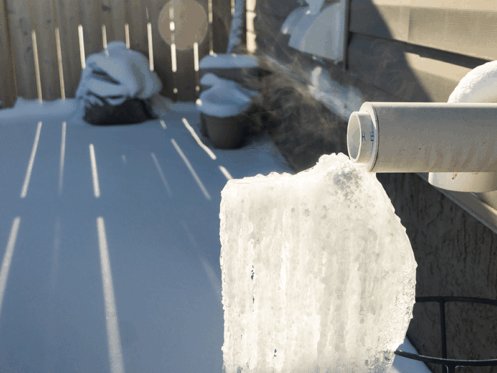
A high-efficiency furnace gets so much heat out of its exhaust that it doesn’t need a chimney. It breathes through two plastic pipes, usually white PVC, that run through the side wall or the roof. One pulls in outdoor air for combustion, and the other pushes exhaust out. Both need to stay open, and in a Fox Valley winter they often don’t. Snow drifts bury the pipes, wind-packed snow seals the openings, and frost can build up around the termination until it closes the gap.
When airflow through those pipes is blocked, a pressure switch inside the furnace senses that the exhaust path isn’t clear and refuses to let the burners light. The furnace may run its inducer fan, then stop, then try again, and never produce heat. This is a safety feature doing what it should.
Walk outside and look. If you find the pipes covered, clear the snow and frost with a gloved hand or a soft broom, and keep tools away from the pipe. Don’t climb a ladder onto an icy roof for it. A steam plume from the exhaust pipe on a very cold day is normal, since the vapor condenses as it leaves, and it isn’t a sign of trouble. After you clear the openings, give the furnace a few minutes and restart it. If the furnace keeps stopping, the blockage may be inside the pipe, and that is a technician’s job.
A Frozen Condensate Line
The same efficiency produces water. A high-efficiency furnace condenses water vapor out of the exhaust, and that water leaves through a trap and a small drain line. If the line runs through an unheated basement corner, a crawl space, or a garage, or empties outdoors, the water in it can freeze solid in a hard cold snap. A float or safety switch senses the backup and shuts the furnace down so the water doesn’t flood the cabinet.
A gurgling sound near the furnace, water around its base, or a furnace that dies a few minutes into each cycle can all point here. Don’t pour boiling water over the line or force anything into it. A technician can thaw the line, clean the trap, and reroute or insulate the run so it doesn’t freeze again.
Fuel, Power, and What Happens in an Outage
Homes in the surrounding countryside, from Black Creek to Denmark, often heat with propane. Check the tank gauge. A tank that looks fine in October can run low by January, and propane delivers less vapor pressure in deep cold, so a furnace on a nearly empty tank is the first thing to struggle. If the gauge reads low, call your supplier before you call anyone else.
The furnace can’t run without electricity, even when it burns gas, because the blower, the igniter, and the control board all need power. During an outage from an ice storm or high winds, there is nothing wrong with the furnace, and the right move is to conserve heat until power returns. A portable generator belongs outdoors, well away from windows and doors, with the exhaust pointed away from the house. Running one in a garage or basement is how people die in a power outage.
When the Heat Pump Is the Problem
Frost on the outdoor coil of a heat pump is expected in cold weather, and the unit clears it with a defrost cycle during which the outdoor fan stops. Healthy Home’s article on why a heat pump freezes up says a unit that stays iced is usually dealing with a stuck reversing valve, a dirty coil or blocked airflow, or a temperature sensor that isn’t triggering the defrost. The article suggests waiting several hours and then trying a manual defrost if your thermostat supports it. In a no-heat emergency at below-zero temperatures, that’s a long time to wait with the house this cold. If your thermostat has an emergency heat setting, use it: the house runs on electric strips until a technician can look at the outdoor unit. Don’t chip at the ice with a tool, since the coil fins damage easily.
If Your Home Has a Boiler
Boilers have a short list of their own. Check the thermostat and the boiler’s power switch. Check the pressure gauge; on a typical residential boiler, it should read in the low teens when the system is cold, and a reading near zero means the system has lost water. Don’t add water to a hot boiler. If the boiler is firing but the radiators or floor stay cold, the problem is usually the circulator pump or air in the lines. Healthy Home’s boiler page lists a lack of heat, uneven heating, strange noises, and leaks as signs the system needs service.
Keeping Pipes and People Safe While You Wait
In a Wisconsin cold snap, a house can drop from comfortable to risky in hours, particularly with the furnace off and the wind blowing. Close doors to the rooms you don’t need, tuck towels along drafty thresholds, and gather everyone into one or two interior rooms. Open the cabinets under sinks on outside walls and let a faucet drip. Don’t use a gas oven or a grill for heat. A space heater needs its own wall outlet, with bedding and curtains kept clear. If the indoor temperature is dropping toward 60 and a baby, an elderly relative, or someone who is ill is at home, getting them out to a hotel or a warmer home is the better call.
What to Tell the Technician and Why Membership Matters
Describe what the furnace is doing: silent, running its fan with no flame, lighting and shutting off, or blowing cool air. Add what you checked outdoors, any blinking light you see on the control board, and the furnace’s age. Healthy Home offers 24/7 emergency furnace repair, and its technicians diagnose the problem and offer options for fixing it.
The Peace of Mind maintenance program lists priority service regardless of the time of day, 20 percent off repairs, and furnace plans that include inspection of the heat exchanger, burners, venting and drain system, flame sensor, and igniter, which are the parts most of the problems above come back to. Next year, schedule annual furnace maintenance in mid to late fall, before the first hard cold arrives.
If you are sitting in a cold house right now, contact Healthy Home Heating and Cooling or call (920) 659-4735 today!
